Gotta Catch ’em All
Which constituents belong in your Blackbaud CRM database? Always one more.
Listen to this article · 9 min
Story time
I was just a little too old to be caught up in the Pokemon craze of the late nineties, but I remember it well because my youngest sister, Jackie, was eight years younger than me and really into it. She had the cards, she had the toys, she had the Nintendo 64 game. The phrase “Gotta catch ’em all” was in the air, and just like “six seven” today, it was something you knew whether you wanted to or not.
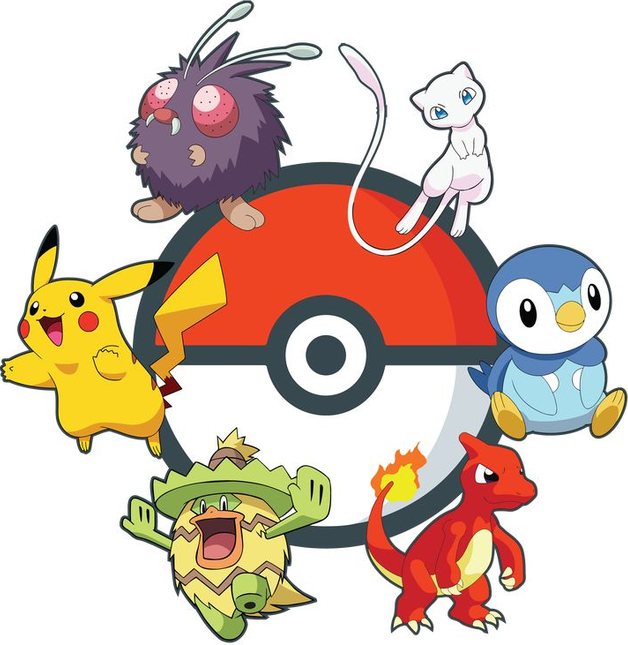
Like so many cultural phenomena, Pokemon had a resurgence about twenty years after its heyday. Around 2018 or so, our oldest son — ten years old at the time — became briefly obsessed with Pokemon Go. He was too young for a phone of his own, but we’d let him borrow one of ours, and he’d wander around the neighborhood trying to “Catch ’em all”. It seemed to me then (and still does to me now) one of the more wholesome applications of gaming technology. If children are begging to go outside and walk for miles, then it can’t be all bad. I did worry about him bumping into trees, falling into ponds, or wandering aimlessly into the road, but on the whole it was good clean fun.
The reason, in Pokemon, that you want to “Catch ’em all” is that each Pokemon you capture becomes available to you in one of the inevitable battles. As a player, you learn the capabilities of the characters, and when your opponent pulls out a Blastoise, you know that your Charizard is the right matchup. You have him, you use him, and you win the battle. Furthermore, the act of fighting gives your Charizard the experience he needs to become even stronger for the next battle.
I recently had an interesting conversation with a client about which constituents would be allowed into their CRM database (how’s that for a segue?). CRM is rarely the first system to receive knowledge of a person’s existence, and in this case the question was which hospital patients to pull into CRM as potential donors. The idea of including “every single one of them” was never floated. Instead, the question was who to exclude. People with no valid addresses were out, as were people with invalid emails. People who had asked not to be contacted, or who had reported a bad experience at the hospital were thought unhelpful. A preliminary wealth screening had been performed outside of CRM, and the question of excluding people with an estimated giving capacity below a certain threshold was brought up. The goal, it seemed, was to restrict the noble status of “Blackbaud CRM Constituent” to only the choicest of potential supporters.
I’ve had many similar conversations over the years — do we import students who did not graduate? Do we purge people who have never attended one of our events? Are we really going to keep track of constituents who are not in one of our candidate’s political districts? Do we want to be like the kid in The Sixth Sense and see dead people?
As we went through these ideas, and the technical ways they could be accomplished, I found myself feeling a bit uneasy. Was this the right approach? In this post, I want to advocate for something closer to a “Catch ’em all” approach to constituent imports.
Are they rich enough?
Bill Gates. Warren Buffett. Audrey Geisel. Joan Kroc. Every fundraising organization dreams of having that White Knight donor come over the horizon and save the day with an enormous, transformative gift. Indeed, those kinds of gifts make up a bigger part of the philanthropic picture every year.1 The quest for those gifts weighs on the mind of every large fundraising organization. It’s not unusual for the process to take several years from that first spark of interest to a signed pledge agreement.
That kind of ‘elephant hunting’ is not going anywhere, and facilitating Major Gifts is, and should be, a critical part of philanthropy. I’m not arguing against that — in fact, I want you to stretch your view of that timeline to an even longer span — one that might include decades. Growth and transformation aren’t just for organizations. The unhoused patient may not remain so, and stewarding them wisely may lead them to express gratitude in the future with a gift they cannot give today. The Bible tells the story of the widow’s mite.2 If that widow won the proverbial lottery the next day, how much do you think she would then contribute? The same goes for students who didn’t graduate. At least a few of those turn out ok.3
Are they alive enough?
One of the most obvious sets of people to exclude from your CRM database are the deceased. Indeed, their potential for future giving is quite limited. I’m writing this in October of 2026, and it’s Halloween season. So forgive me for suggesting that the dead still have relationships that matter to your organization.

My father passed away at the age of 58 in March of 2009, just a couple of years after being diagnosed with lung cancer. He was an avid sportsman, and was the odd mixture (more common than you might think) of a very conservative southerner who cared a lot about the environment. He was a member of Ducks Unlimited for many years, and I still remember seeing the magazines around the house, and the bumper sticker on his old Dodge Dakota pickup truck.
Some years ago, I was fortunate enough to contract with Ducks Unlimited for some Blackbaud CRM customization work. While doing that work, I entered myself in their test database as a ‘dummy’ constituent (no stretch there). Later, I searched for my record by entering the search term ‘Styons’ — usually a unique enough name to pull me up on the first try. But there wasn’t just one record there — there were two. The other one was my dad. He was still listed there with our old Quantico, Virginia address. You can believe that I sat there staring at that search result screen a little longer than usual.
What’s my point? Even deceased constituents may be a clue that you are connected to a donor in unexpected ways. Relationships are the foundation of giving, and those relationships linger long after a donor has passed on. On a more practical level, you want to know who has passed away so that you can avoid trying to communicate with them directly. At best, such efforts are a waste of time. At worst, they come across as alienating and clueless to family members. On the other hand, respectful approaches to the bereaved can open the door to extending a relationship from (dare I say it) beyond the grave to potentially receptive survivors.
Am I suggesting that you should import deceased constituents into your CRM database? My answer to that is categorically ‘yes’. Just be sure to schedule the ‘Ghostbuster’ global change.
Is our database big enough?
In 2026, your database is big enough, OK? A basic constituent record typically takes up a very modest amount of disk space. In this age of data warehousing and multi-terabyte storage, that’s a small fraction of your overall storage. Having said that, if database size is costing you money (especially in a hosted scenario), then I’d encourage you to take a look at the Database Growth Management page under Administration. It can help you find real sources of space savings, and I can promise you it isn’t because you have too many constituents.
But they told me to go away
It’s a hard truth that some people want you to go away. They don’t want you to call. They don’t want you to write. They are angered by your existence. Communicating with them by email is like communicating with a wasps’ nest by stick. They told you no. They meant no. So they should obviously be left out of CRM, right? Experienced teams already know that people in this category are some of the most critical to keep in your database. Why? Because to honor their wishes, and respect their choices, you need to know what their wishes are. Bring them in. Flag them as ‘do not solicit’, ‘no contact’, or whatever you call it. Contract with me and I’ll make a customization that puts a skull and crossbones over their constituent page. But under no circumstances should they be ignored. The same goes for people with invalid or incorrect addresses — you need to move them from “unknown unknowns” to “known unknowns”, as Donald Rumsfeld would have said4.
Catch ’em All
Blackbaud CRM is a powerful collection of technology. It is a valuable reporting tool. It is a repository for documents and knowledge. It is many things.5 But more than any of that, it empowers decision making, and your decisions deserve the full picture. Excluding constituents from your database is like throwing out Pokemon cards. Even if they aren’t part of the fundraising picture today, they can grow. They can evolve. You may need them for the next battle. Like Ash the Pokemon trainer, you may one day need to point at them and say “former widow!” “former dropout!” “former unhoused patient!” I choose you! So I say Catch ’em all.
Questions? Comments? Please reach out at contact@nonprofit-complete.com, or via any of the methods on our Contact page.
Notes
- Altrata, High Net Worth Philanthropy 2026 ↩
- Mark 12:41–44 (ESV) ↩
- Business Insider, “Billionaire college dropouts” ↩
- Known unknowns ↩
- Keeping it positive here folks ↩